Spendella
Держите расходы в рамках бюджета.
Задайте лимиты на продукты, кафе и другие категории. Следите за расходами, пока ещё можно скорректировать планы.

Бесплатно навсегда · 7 дней «Максимум» в подарок
Соберите счета, расходы и накопления в одном приложении. Следите за бюджетом, планируйте покупки и откладывайте на свои цели.

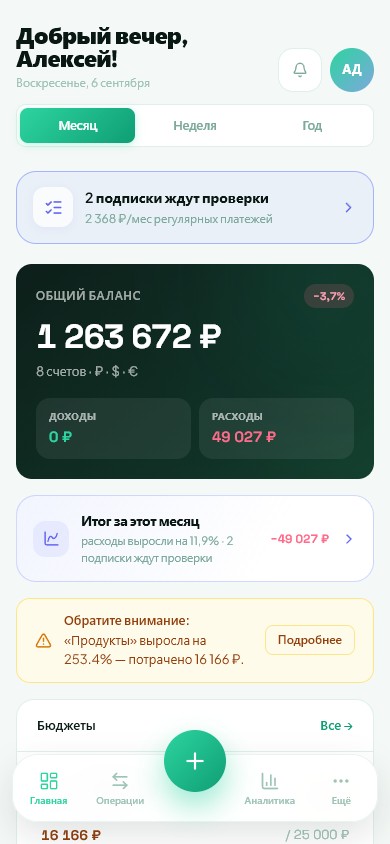
01 / Посмотрите, как это работает
Проверяйте остатки на счетах, сравнивайте расходы по категориям, следите за накоплениями — а вопросы по своим цифрам задавайте ИИ-ассистенту.

02 / Бюджеты и цели
Задайте лимиты на продукты, кафе и другие категории. Следите за расходами, пока ещё можно скорректировать планы.
Создайте цель на отпуск, крупную покупку или финансовую подушку. Укажите нужную сумму, вносите пополнения и отслеживайте прогресс.

03 / Раздельно и вместе
Пространство — отдельный учёт со своими счетами, категориями и бюджетами. Переключайтесь в одно нажатие: деньги не переводятся, отчёты не смешиваются.

Общий счёт, лимиты, цель и кредиты — на всех. У каждого свой аккаунт и роль: владелец, редактор или наблюдатель. Видно, кто сколько потратил.

Автоматизация и ИИ
Правила и ИИ-категоризация убирают повторяющуюся рутину, а крупное решение можно сначала проверить в расчёте. Вы видите результат и решаете, что применить.
Задайте правило магазина — новые операции без категории попадут куда нужно.
«Маяк» → «Продукты»Посмотрите, как покупка, накопления или дополнительный доход повлияют на цели.
Сначала посчитать, потом решитьЗадайте дополнительный платёж и сравните порядок погашения, срок и переплату.
Высокая ставка или маленький долг — что первым?Начните с прошлых расходов, проверьте предложение и установите подходящий лимит.
Бюджет под ваши привычкиСобственные правила категорий доступны без ИИ. Поиск повторений, предложения лимитов, «Что если» и план погашения — на «Плюсе» и «Максимуме». Доступ и стоимость ИИ показываются перед запуском соответствующего инструмента.
04 / ИИ вместо ручного ввода
Разбирайтесь в расходах и следите за лимитами. Задавайте вопросы по своим данным, добавляйте операции голосом, по чеку или из выписки.
Первые 7 дней ИИ открыт всем в подарок. Дальше — на тарифах «Плюс» и «Максимум». ↗ИИ показывает картину по вашим данным и объясняет цифры. Он не советует, куда вложить и на чём сэкономить: решение остаётся за вами.
«Кофе, 340 рублей с карты». ИИ распознает сумму, счёт и категорию.
Загрузите фото. Spendella извлечёт данные покупки для проверки и сохранения.
Перенесите историю операций из файла и получите основу для анализа расходов.
ANDROID · ПО ВАШЕМУ ВЫБОРУ
Выберите приложения банков — Spendella найдёт покупки в их уведомлениях.
Без доступа к истории SMS. Распознаваемые реквизиты удаляем до отправки.
Какие уведомления обрабатывать — решаете вы. Отключить можно в любой момент.
Подключить: инструкция со скриншотами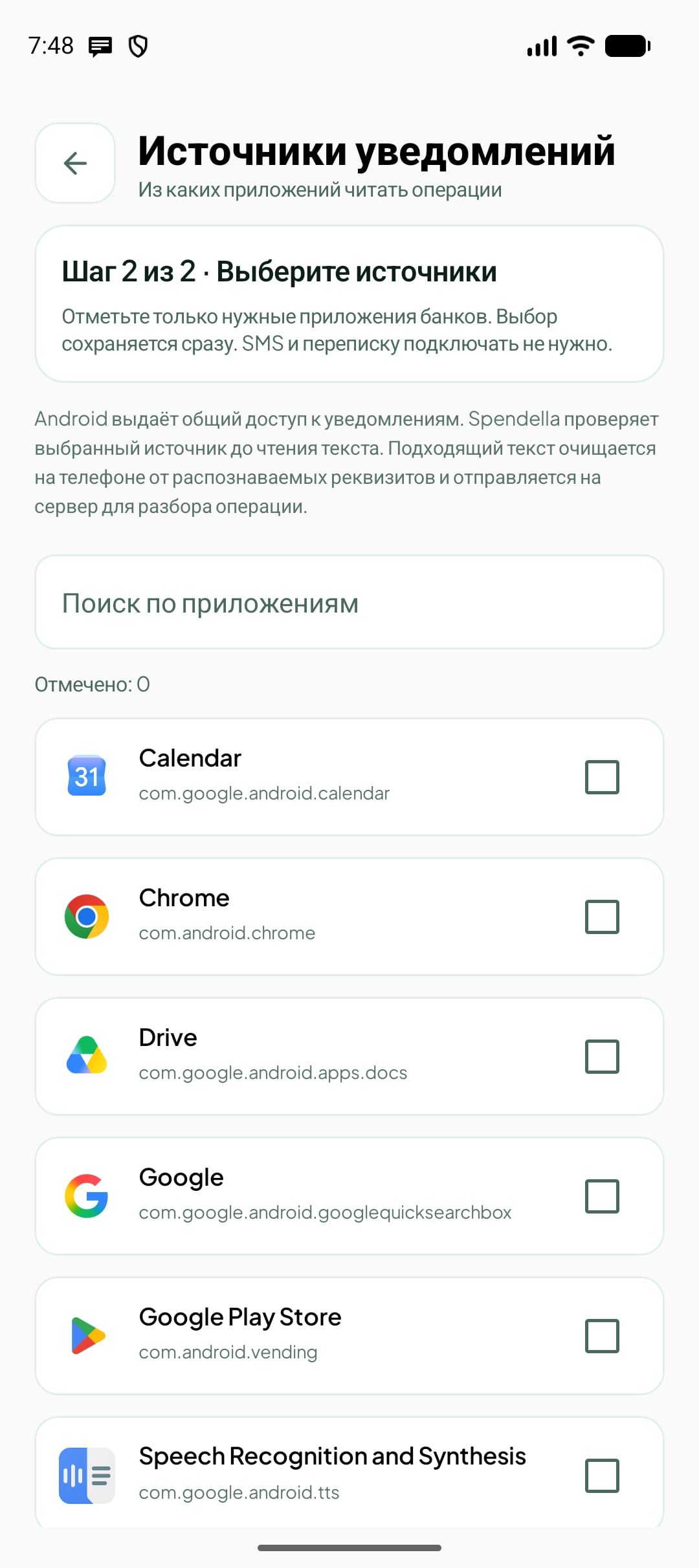
05 / Тарифы
«Базовый» — личный учёт без лимитов. «Плюс» добавляет автоматизацию, расчёты и ИИ. «Максимум» — совместный учёт и больше возможностей ИИ.
Два счёта, бюджет и учёт повседневных расходов.
Бесплатно, без ограничения по времени
Начать бесплатноВедите личный учёт без лимитов на счета, операции, кредиты, бюджеты, цели и подписки.
1990 ₽ одним платежом за год
Выбрать БазовыйЭкономьте время: автоматизация учёта, расчёты для целей и кредитов, помощь ИИ.
4990 ₽ одним платежом за год
Выбрать ПлюсОбщие бюджеты, больше операций ИИ и автоматические отчёты.
9990 ₽ одним платежом за год
Выбрать МаксимумКогда двух счетов и одного бюджета уже мало: счета, бюджеты, цели и подписки без лимита, регулярные платежи, прогноз и сравнение периодов.
Чтобы меньше разбирать расходы вручную: Spendella находит подписки и регулярные платежи в истории, предлагает правила категорий и лимиты бюджета. Можно проверить «Что если» для целей и рассчитать план погашения кредитов. А ИИ помогает с чеками, голосовым вводом, выписками и вопросами о финансах.
Для совместного учёта: общие бюджеты, отдельные рабочие пространства и больше операций ИИ.
Оплата — по публичной оферте; персональные данные — согласно политике конфиденциальности.
Всегда под рукой
Добавьте расход сразу после покупки или проверьте бюджет в дороге. Войдите в свой аккаунт, чтобы продолжить работу на другом устройстве.
Spendella бесплатна без ограничения по времени — «Старт» это полноценный тариф, а не пробный период. Сверх него каждому новому аккаунту дарим 7 дней тарифа «Максимум»: чат с ИИ, распознавание чеков, голос, импорт выписок, совместные бюджеты. Включено 35 операций ИИ, до 10 в день. Подарок включается одной кнопкой после регистрации и подтверждения почты, карта не нужна, даётся один раз. Когда дни закончатся, всё заведённое остаётся видно, а работа продолжается на тарифе «Старт».
Два счёта, неограниченное количество операций, один бюджет и аналитика расходов. Бесплатным тарифом можно пользоваться без ограничения по времени и без привязки банковской карты.
На «Плюсе» включено 150 операций ИИ в месяц, на «Максимуме» — 500. Голос, распознавание чеков и импорт помогают подготовить записи; перед сохранением проверяйте результат. Бесплатный и «Базовый» тарифы не включают ИИ.
Да. Общий бюджет — отдельное пространство с общим счётом, лимитами, целью и кредитами. У каждого участника свой аккаунт и роль — владелец, редактор или наблюдатель, — и видно, кто сколько потратил. Личные финансы остаются в личном пространстве. Присоединиться по приглашению можно с любого тарифа, создавать общие бюджеты — на «Максимуме».
Нет. Можно добавлять операции вручную. На тарифах с ИИ доступны распознавание чеков, голос и импорт банковской выписки из файла.
В браузере на компьютере или телефоне и в приложении для Android — установите его из RuStore или скачайте APK с сайта. Войдите в один аккаунт, чтобы работать со своими данными на разных устройствах.
Платный тариф действует до конца оплаченного периода и сам не продлевается, если автопродление не подключено. Если подключено — отключите его в разделе «Тариф», платные возможности останутся до конца периода. Условия оплаты и возврата описаны в публичной оферте.
Соединение защищено HTTPS, пароли хранятся хешами, а названия счетов, описания и заметки к операциям зашифрованы в базе. Доступ участников общего бюджета ограничен их ролями, активные сессии видны в настройках, и любую можно завершить. Запросы к ИИ идут только через наш сервер: перед отправкой из текста вырезаются номера карт и счетов, телефоны, а из банковских уведомлений — ещё и остаток на счёте. Модель не получает ни вашего пароля, ни доступа к аккаунту — только текст, нужный для ответа. Обработка идёт на серверах в России, и ваши данные не используются для обучения модели. Аккаунт и все данные можно удалить самому. Подробнее — в политике конфиденциальности. Политика конфиденциальности ↗
SPENDELLA
Когда подарочные дни закончатся, ничего не удалится: всё заведённое остаётся видно, а работа продолжается на тарифе «Старт». Платный — только если захочется.
Начать бесплатно Бесплатно без ограничения по времени. Первые 7 дней — с возможностями тарифа «Максимум» в подарок. Карта не нужна.